
Buddhist Mind Card - Part II

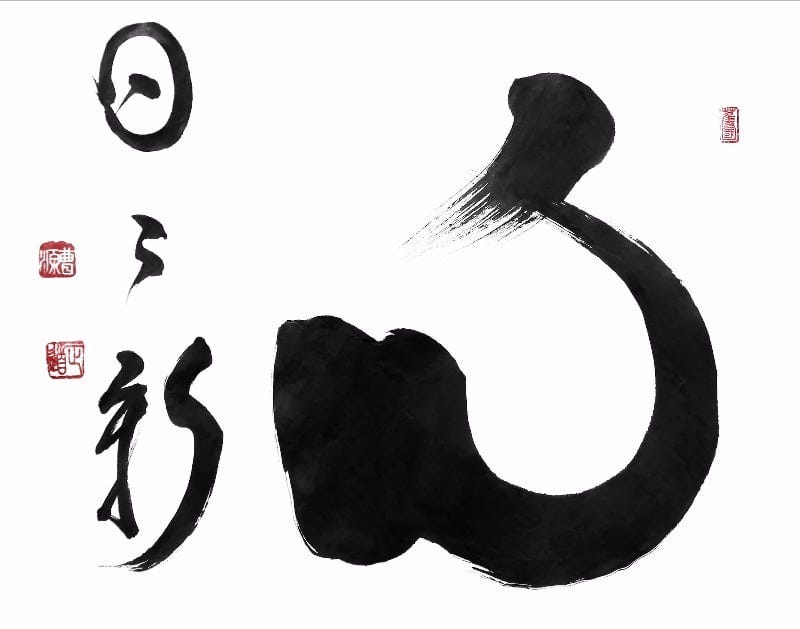
In Part I of this essay, “Playing the Buddhist Mind Card,” we reviewed the various strategies by which the concept of “Mind” (or “mind”) is weaponized in Buddhist discourse to enforce a certain normative conception of life and practice, often defined in terms of conformity to a narrowly idealized vision of “Buddhism.” We identified specific “onto-political machineries” – the “Spiritual Bypass,” “Anti-Intellectualism,” the “Anti-Revolutionary Gaslight,” and the “Paranormative Erasure” – through which this enforcement is paradigmatically carried out, both in traditional Buddhist teaching and in the context of modernized “consensus Buddhism.” Finally, we glimpsed the potential to liberate genuine realization of “Mind” from the manipulative operations of Buddhist Mind Card (BMC) logic.
In continuing this inquiry, and in keeping with the orientation of the larger Dharma between Worlds reflective ensemble, Part II will track the Mind Card dynamic as a by-product of the interplay between Buddhism and modernity. In modern Buddhist discourse (and Buddhist modernist discourse, which is sometimes but not always a slightly different thing), there is a common trope that falsely organizes “human knowledge” according to an essentialized duality of “East” and “West.” Knowledge and mastery of external, physical reality, the trope claims, has been the province of Western science and rationality. The East, by contrast, has specialized in a “science of the Mind,” an equally masterful empirical exploration of inner, non-material reality. Advocates of this framework then go on to assert that these pursuits are equally important, equally valid, and equally necessary for a comprehensive understanding of reality.
The implication is that both paths reflect and reveal ontological zones that are pregiven, built into the nature of things, inherent in the structure of reality – “mind” and “matter.” For all his effort to think “post-metaphysically,” the great American integral theorist and committed spiritual practitioner Ken Wilber reinforces this exceedingly metaphysical assumption in his articulation of the “four quadrants.” The “Upper Left” quadrant – in Wilber’s AQAL system – inscribes first-person interior reality as an indispensable and necessary dimension of all happenings. Likewise, the Upper Right and Lower Right quadrants encompass the world of physical matter, in its singular and collective forms – also a necessary component of all conditioned reality. Early on in my study of Wilber’s system (which I undertook zealously in my early twenties), I recognized the ambiguity of the Upper Left quadrant in relation to the multivalent concept of Mind (or mind), especially as Mind is articulated and explored in advanced yogic and spiritual practice-traditions. For example, in the Cittamatra (Mind-only) or Yogacara (Yogic-engagement) school of Mahayana Buddhism, Mind is not viewed as just one zone or perspectival dimension within a larger grid of reality (i.e. the Upper Left quadrant). The whole point of this school’s teaching is that Mind is the nature of all reality, that all reality is the nature of Mind. Mind is everywhere and everything, and realizing this is the gateway to liberation.
This enlarged – indeed, all-inclusive – intimation of Mind has deep affinities with other traditional conceptions of ultimate or Absolute reality, including monotheistic notions of God, Brahman, and Spirit, as well as some resonance with the thinking of modern idealist philosophers such as Berkeley and Hegel. This absolutization of Mind in Buddhism is the source of major tension with modernity, which we will get to in a moment. For now, let it be acknowledged that Mind, in this absolute sense, is not an empirical concept. It is not some zone or region of reality that can be investigated, studied, and known, alongside other zones or regions. It is unbounded, Absolute – Reality with no outside. Therefore, it does not lend itself to “science” in any recognizable sense; it cannot be approached as a specialized domain. (It cannot be approached at all!) Mind does not refer to any particular object, realm, or field of experience. Practical injunctions to “turn towards” or “investigate” or “look into” the Mind are not operating empirically but in some other way.
This other way of operating belongs to a process of yogic and spiritual transformation that is very real and has indeed been profoundly (though not at all exclusively) developed by traditions east of the Euphrates river. This process involves high-tech methods, elaborate taxonomies and systems of representation, and sustained periods of experiential and analytical immersion. Thus, in some ways, it resembles and lends itself to generative interaction, and even collaboration, with modern physical sciences. However, it tends to proceed on the basis of a logic of Mind that, from a modern critical-theoretical standpoint, appears as highly problematic and seems to function as an ideological device or metaphysical control-system.
This controlling, mystifying, manipulating function is precisely what we found in the Buddhist Mind Card strategies diagnosed in Part I of this essay. We could posit an Absolutistic logic of control that governs all the dominant religious systems of the world and is encoded in the “perennial philosophy,” which forms their common metaphysical template. God, Brahman, Mind: these are supreme power-concepts, founding, talismanic institutors and activators of authority, super-organizers of knowledge and perception. The baseless conversion of a formless Absolute into a particular, relative instantiation of form constitutes the founding, law-giving act of power. Through this absolutistic substantiation or reification, a necessary, normative order is established. Where the Buddhist Mind Card is in play, identification of Absolute, Unbounded, Infinite Mind with some relative, finite set of circumstances, practices, and rules is what confers authority upon Buddhist institutions and their representatives. It forms the innermost impetus both for spiritual direction and for social domination and hierarchy. Insofar as these forces and their dynamics are conceived as microcosmic reflections of the total reality, their logic is the logic of order as such, the logic of reification, of making-real.
In practice, imposition of the Absolute concept – here, Mind – calls for surrender to the prescribed forms. Command of the concept’s scope and definition determines what forms are recognized as authorized and empowering. “Don’t waste your time with x. Turn your attention to your own Mind.” And with that injunction comes a whole apparatus of specific requirements and obligations. Taken altogether, “looking into your mind” implies becoming a Buddhist, assimilating all the relevant codes, norms, and procedures. The Mind Card becomes propaganda, the ticket to a whole way of life.
Indeed, buddhadharma, Buddhist practice, encompasses all of life, all of reality; it is the originary, evaluative demarcation that is ideological, coercive, that founds an order of power. And yet we are always implicated in the play of power, and the point here is not to escape it. One stream of modernity negates the absolutistic concepts, exposes them as ideologically manipulative and deceptive. Another recognizes their endlessly expansive potential and opens them further, breaking the bonds of tradition, institution, and localized authority.
Everything is the way; and yet the water flows where it flows. This paradox is at the heart of spiritual engagement. How to embody boundless Mind, here and now? This question is repeated, reactivated, in virtually every Zen koan. There is no limit to the scope and variety of this koan’s many responses.
Mind is everywhere, everything. This points to suchness, flowing now just as it is. The Absolute is to be found nowhere else. How to find it, exactly in the flow? The assumption we have about Mind (or is it “mind” in this case?), that it is interior, that it is accessed in a privileged way by the individual subject, that it cannot be reached or attested to by others, is not specific to modernity, or to Greco-European and post-Christian traditions of thought. Questioning that assumption is a vital force in Buddhist practice – articulated as central by the Yogacarins and their progeny. If Mind is not inside, in here, not bound within a sphere of subjective access or private identification, then what is it? We could say that everything has the nature of appearance and that everything is a construction. To vivify, we can add that everything is like a dream or a magical illusion; there is nothing behind appearances, no solid grounding. There’s no real subject experience is happening to; it’s just the open play of appearances.
These realizations emerge through experimental processes of direct inquiry, perceptual alteration, and embodied engagement – what modern Buddhists call “meditation” or what ancient Indic sramanic traditions call “yoga.” Processes that open to Mind go beyond technology, beyond “arts,” beyond practice, to immerse in what is inconceivably unbound, free, and all-inclusive. All appearances manifest Absolute wakefulness and pure spontaneity. The radiant luminosity of Mind is fully present and complete in its first initiatory glimpse, and yet habitual contraction and identification gives it the semblance of otherness, unattainability. Liberation is realized by freeing the obstructed and fixated habitual self-contraction and giving way to Mind’s intrinsic natural radiance and compassion.
Mind, at this level of immediate, embodied realization, is all-pervasive, fully permeating every zone and dimension of moment-to-moment experience. Every appearance is nondual, no separation between phenomena and experiencer, no subject/object gap or duality, no interior and exterior. Every manifestation is “inner” in the sense of being utterly intimate, a transitory mutation of awareness, without any independent substance or determinacy. Everything is a movement within awareness’s field, a movement of Mind’s great ocean, a passage of weather through vast sky.
What is Absolute is not personal, subjective experience but Mind, Awareness, which spans the far edges and constructed boundaries of relativity. Awareness traverses the alleged division between life and death, waking and dream, consciousness and unconscious, this world and beyond, self and other. The crystallized forms of ordinary sensory experience occupy just one channel within the open spectrum of possibilities Awareness is capable of accommodating. No alteration exceeds its bounds. No action violates its integrity.
This is Mind as Great Way, Open Road, encompassing even the weirdest and farthest-out modern deviations and derangements. Tantric traditions offer models for transgressive boundary-crossing and dissolution of polarities; their practices are often systematic and formulaic, focused on particular edges and taboos circumscribed within the context of a stable religious social order. The transformations wrought by modernity destabilize tradition and destroy religious authority, leaving no static normative order in relation to which transgression might be defined, no institution that serves as a presumed microcosmic reflection of Absolute reality.
With the dismantling of established sacred canopies, all arrangements have the potential to be recognized as equal manifestations of Mind. This modern social situation is prefigured by teachings such as those of the Yogacara school, and by radically mystical and gnostic currents throughout the history of religions. Yet the Buddhist (and especially Yogacarin) emphasis on Mind enjoys a special filiation with modern equalization, as it resonates with modernity’s incipient reaffirmation of Mind’s (or “consciousness’s”) metaphysical primacy.
Without getting too far into the weeds, we can observe that in recent decades the “study of consciousness” has emerged as the vehicle for a range of important transformations in the modern worldview, and in its dominant regimes of knowledge. As a result, many phenomena regarded as “anomalous,” “paranormal,” or in some way “extraordinary” have become integrated into legitimate fields of scientific and humanistic research. Quite often, this has been facilitated by situating these phenomena within a conceptual framework that views “consciousness” as the fundamental substrate of physical reality. To this extent (and contra the BMC shutdown-logic analyzed in Part I), reference to Mind has become an enabling condition for the pursuit of revolutionary and fringe modalities of scientific investigation and research. This development reflects a shift in modern conceptualization – we might say, from mind to Mind: the prevailing modern image of mind as an individual, subjective realm of private experience is increasingly displaced by an expansive vision of Mind as all-encompassing ground of reality.
This “new” modern “idealist” vision of Mind carries great potential as a unifying framework for understanding a diverse assortment of historically suppressed and ignored phenomena (such as psi, NDE, UFO/UAP encounter, psychedelic experience, plant and animal intelligence, and more). As such, however, it has so far stopped short of actualizing the Buddhist engagement with Mind as an unsurpassable gateway of supreme existential liberation. These pathways are by no means unrelated or mutually exclusive. Historically, Buddhist and other gnostic-mystical engagements with Mind have provided initiatory entry into a vast field of informational flow and energetic resonance. Yogic realization of Mind as the body of reality has led to complex and subtle understandings of the energetic circuitries of life, including the movement of vital energies (prana/qi/lung) and the organization of matter according to patterns of vibratory frequency. Entered experientially, such understanding can be channeled for the compassionate cultivation of psi and other “paranormal” abilities (siddhis), and for benevolent, healing attunement to nonhuman intelligences and hidden ecologies. Within a Buddhist-gnostic liberatory context, such capabilities appear as special means for enhancing, intensifying, refining, and expanding the mandalic embodiment of awakening, deepening the total fulfillment and enactment of the nature of Mind.
Such means become useful and available not through advancements in theoretical knowledge, but as the virtuous outgrowth of direct yogic perception and realization. This realization can be catalyzed through intimate pointing to Mind’s nature – intrinsic, radiant, reflexive, always already present. Freed from manipulative BMC strategies, this pointing carries no necessary allegiance to normative Buddhist cultural forms and regimes of practice. In the modernized, deterritorialized world, such regimes might only get in the way. Realization of Mind’s nature is an inside job, in that boundless Mind only has an inside. It is self-secret; its secret can never get out. The traditional Tibetan word for a Buddhist (nangpa) literally means an “insider.” Here the term finds an expanded, cosmocentrically radicalized valence. An initiate into the nature of Mind is all-in. There is only Mind. As the newborn Buddha declared, “I alone am the World-Honored One.”
Nothing in the Mind-only mandala is alien, foreign. This is not some Hegelian-style dialectical reappropriation but an immediate liberatory actualization and unconditional faith-orientation for continuous practice. Practice here is not prescriptive and formal but spontaneous and openly experimental. Recognition that everything is Mind fulfills Dogen’s proclamation in Genjokoan (Manifesting Suchness) that “all dharmas are buddhadharma,” that all appearances are buddha-manifestations, luminous contours of the Way.
With this practice-realization comes a perpetual disclosure of Mind as kaleidoscopic, holographic, mandalic. All the technological, artistic, and imaginative capabilities, not only of the ancient traditions but of “secular” modernity, with its complex bodies of cultural and scientific knowledge, can be brought to bear as instruments and conduits of enlightened activity. This is the truly Great Vehicle – buddhahood, awakened Mind, openly and fully embodied in the all-inclusive completeness of each moment. This is the vehicle of suchness itself as a constantly mutating mandala of total liberation.
Mandalic actualization of Mind opens a freedom beyond what modern civilization has allowed itself to imagine. It moves towards an enlightened society – shambhala – that incorporates all the marginalized, stigmatized, and repressed knowledges and potentialities that have remained hidden from the modern world, haunting it as specters. Phenomena such as psychedelic breakthrough and initiation, UFO/UAP interaction, and “anomalous” psi ability indeed become intelligible in new ways when a holographic Mind-paradigm is embraced. This revolutionary paradigm-shifting process has been reconfiguring scientific disciplines and their theoretical frameworks for more than a century now. Philosophically, this shift is perhaps best exemplified in the recently influential work of Bernardo Kastrup.
More fundamentally, the awakening and blooming of liberated mandalic Mind brings an empowerment inconceivable from the standpoint of modern physicalist philosophy, with its liberal conceptions of subjectivity and personal freedom. The whole cosmos is psychoactive, psychedelic, Mind-manifesting, awake with intelligence. Everything participates in continually evolving webs of communion and communication, simulating magical, living worlds through conscious, creative interaction and complex flows of information. Nature is a quantum supercomputational poem, weaving itself spontaneously through the power of attention, morphing with the lightning-speed intentionality of awareness itself. Altering perception is altering the world. All the terminals are integrated. Death, dream, visionary and extrahuman realms, alternate consciousness-systems, zones of virtuality, all become available as immanent planes of operation, live venues of bodhisattva activity. Mandalic self-programming proliferates endlessly, guided by transpersonal relations of intimacy, friendliness, and compassion.
Meditation – Mind Minding Mind – is the basis for all the mandalic arts and sciences. Yet mandalic practice unfolds with infinite novelty and complexity, spontaneously disclosing unimaginable filiations, sampling and mixing constellations of ritual ecology. All is relation; the Great Vehicle is a family affair. Meditation, as familiarization, is the art of limitless intimacies. This path of immediacy and discovery is both spiritually liberatory and scientifically revelatory. Its enactment is a communal-democratic revolution of love, justice, and ecological balancing. Mandalics practices the energetics of friendship, the vibratory healing of trauma and violence through care, respect, and loving attention. Through common presence and interconnectivity, myriad positive collaborations and companionships become possible. A society no longer governed by the fears and limitations produced by existential contraction and self-identification is a transformed society. Mind reflects itself to itself, manifests itself to itself, through spontaneous relations of compassion, interactive arts of caretaking, tending, nurturing, flourishing, gathering, receiving, enjoying. Our work together is a life-giving, courageous responsiveness.
Buddhist Mind Card logic has no place, can find no grip, when Mind recognizes and energizes itself through interrelational processes of continual emergence. Traditional Buddhist forms, institutions, theories, and practices are not obsolete in the context of such processes. Rather, freed by modern critique from the delusion of reificatory authority, their true potency can shine forth more vividly. Buddhism was never about Buddhism. To make it so was always to distort its liberatory purpose. Mind awakening to itself can be the basis for a different world. It will not be a Buddhist world but a world of buddhas.
Among traditional vehicles for Mind-awakening – yogic rituals, contemplative arts, spiritual technologies, transformative practices – those we consider “Buddhist” are especially abundant, diverse, and efficacious. However, the solidity of the category “Buddhist” is profoundly questionable, given the complex cross-cultural interactions, hybridizations, and shifting geographies that have shaped our spiritual traditions – all within a context of influence from mysterious transhuman forces and forgotten historical processes. What we call “Buddhism” is largely a modern colonialist scholarly construct. Formations of Buddhist practice have always been porous and adaptive, redesigning, upgrading, and recalibrating themselves in accord with situational need.
The secularizing, globalizing, destabilizing energies of modernity have further loosened the structures of traditional authority and ethnocentric membership, decoupling buddhist Mind-yogas from Buddhist culture and identity. These forces have been inseparable from the corrosive violence and injustice wrought through military, economic, and cultural imperialism – what used to be called “globalization” but now seems to almost everyone like suicide. For Asian and Asian-diasporic Buddhist communities, the “modernization” of Buddhism has been accompanied by oppression, displacement, denial, cultural theft, and distortion. Whatever forms emerge from the ongoing interplay of Buddhism and modernity will have to be guided and tempered by careful attention to this history and its continuing repercussions.
Reassertion of traditionalist authority and hierarchy, however, is not the answer. Indeed, it has never been the answer, has always been a false path, a strategy of imprisonment through reification. Living in the open koan of Mind has always been the undying spirit of Zen practice. Buddhist Mind-yogas instantly leap beyond themselves, beyond any formalizable procedure, operation, or technique. In the moment, they leap beyond Mind itself, calling into question its very findability.
Calligraphy - “Our mind, new and fresh every day” by Shodo Harada Roshi
"Formations of Buddhist practice have always been porous and adaptive, redesigning, upgrading, and recalibrating themselves in accord with situational need." Kennyo, I am pondering this over coffee. I find myself in the last 5 years inching closer to this as a recognized 'working truth' in my life. It will take me some weeks to study what you have written.. thanks for taking time to write down your thoughts.